
This site is for families seeking memory care services. For employment inquiries, visit our Indeed page.
Memory Care Resources
Enjoy these articles on finding the right care for your loved one
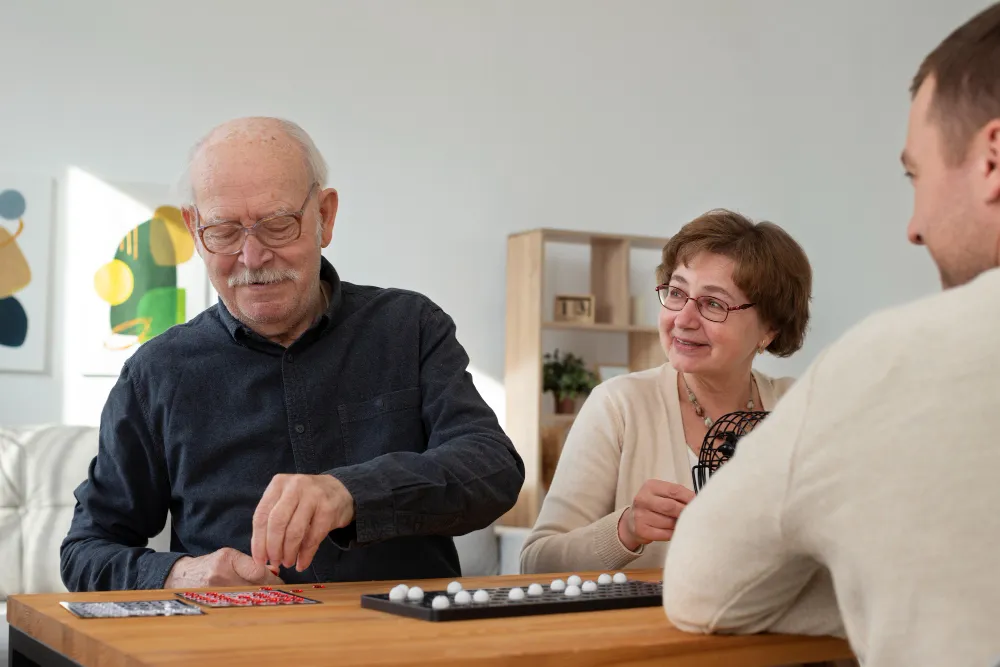
What Is Cognitive Stimulation Therapy for Dementia? | Benefits & CST
Cognitive Stimulation Therapy, or CST, is a structured group program that uses themed activities, discussion, and social engagement to support memory, language, and thinking skills in people with mild to moderate dementia. It's one of the few non-drug dementia treatments backed by strong clinical evidence.
If you've heard the term from a doctor or care team and wondered what it actually looks like in practice, you're in the right place.
Quick Answer
Cognitive Stimulation Therapy is an evidence-based group therapy for dementia that runs through themed sessions, like music, current events, or word games, to keep the brain engaged.
It typically involves 14 sessions over 7 weeks, led by trained caregivers, in groups of 6 to 8 people with similar cognitive ability.
Research shows that Cognitive Stimulation Therapy (CST) can improve cognition, affective symptoms and quality of life in people with mild to moderate dementia (Desai et al., 2024). NICE also recommends group CST for people living with mild to moderate dementia.
Where Cognitive Stimulation Therapy Came From
In the early 2000s, Dr. Aimee Spector and her research team developed Cognitive Stimulation Therapy (CST) in the United Kingdom.
It was built specifically to give people with dementia a structured, evidence-backed alternative to medication alone, something engaging enough to actually improve daily functioning.
Since then, it has been studied extensively and adapted for use around the world, including here in the United States.
How a Typical CST Program Works
CST isn't a single activity. It's a full program with structure, repetition, and a clear rhythm designed to build familiarity over time.
Here's what a standard course generally looks like:
Element | Detail |
Group size | Usually 6 to 8 participants |
Caregivers | Two trained staff members per session |
Frequency | Twice weekly, or once weekly for longer courses |
Total length | 14 sessions over about 7 weeks |
Session length | Roughly 45 minutes |
Format | Themed group activities and discussion |
Each session opens with a warm-up, often a familiar song, followed by a themed activity. Themes might include childhood memories, current events, categorizing objects, or creative projects.
Many programs also use a "reality orientation board," a simple display showing the date, weather, and location, to help ground participants at the start of each session.
What Actually Happens in a Cognitive Stimulation Therapy a Session
Picture a small group sitting together, not in rows, but in a circle that feels more like a conversation than a class.
A session might involve sorting photos by category, discussing a news headline, playing a simple word association game, or singing a familiar tune together.
The goal isn't to test memory or point out what someone forgot. It's to create genuine engagement, conversation, and a sense of accomplishment.
Caregivers personalize each activity to the group, adjusting difficulty so sessions stay challenging without becoming frustrating.
Why Cognitive Stimulation Therapy Works
CST is built on the idea of cognitive plasticity, meaning the brain retains some capacity to adapt and respond to stimulation, even amid dementia-related decline.
Rather than focusing on facts or explicit recall, CST leans on implicit memory, the kind of memory involved in recognizing a song, a routine, or a familiar face.
That's part of why it tends to succeed where simple memory drills often don't. It meets people where their strengths still are.
What the Research Shows
CST has more research supporting it than almost any other non-pharmacological dementia intervention, and it is included in national treatment guidelines as a result.
Key findings from clinical research include:
●Improved cognition, including memory, language, and reasoning
●Better quality of life and day-to-day well-being
●Increased social interaction and confidence
●Some evidence of effects comparable to certain dementia medications
●Reduced caregiver stress in several studies
The National Institute for Health and Care Excellence (NICE) is currently the only body recommending a non-drug therapy specifically for improving cognition in dementia, and CST is that therapy.
Who Benefits Most From CST
CST is generally designed for people in the mild to moderate stages of dementia, including Alzheimer's disease and mixed dementia.
It works best in a group setting, so it's particularly well suited to residents living in a community environment where social connection is part of daily life.
For people further along in the disease or who struggle in group settings, other approaches like one-on-one sensory or music-based activities may be a better fit.
Common Questions Families Ask
Many families want to know if CST replaces medication. It doesn't. CST is typically used alongside medical treatment, not instead of it.
Others ask if results last. Improvements from an initial course can fade over time, which is why many programs offer ongoing "maintenance CST" sessions to sustain the benefits.
How Gulf Coast Memory Care Brings This to Life
This kind of structured, meaningful engagement is exactly what our Programming is built around at Gulf Coast Memory Care in Estero, FL.
As a community that is 100% memory care focused, we don't treat cognitive engagement as an occasional extra. It's part of daily life here.
Through our Rhythm of Life program, residents take part in activities designed to stimulate memory and joy, echoing the same principles that make CST so effective: Structure, familiarity, and genuine connection.
Our people care like family, and they know each resident well enough to personalize activities the way CST calls for, not a one-size-fits-all approach.
Our places are calm, comfortable, and designed to make group engagement feel natural, not clinical, whether that's a shared activity room or a quiet courtyard conversation.
Frequently Asked Questions
What is Cognitive Stimulation Therapy used for?
Cognitive Stimulation Therapy is used to support memory, language, and thinking skills in people with mild to moderate dementia through structured group activities. It's one of the few non-drug treatments proven to improve both cognition and quality of life.
How long does a Cognitive Stimulation Therapy program last?
A standard CST program runs for 14 sessions across 7 weeks, usually delivered twice a week in 45-minute group sessions. Many programs continue with weekly maintenance sessions afterward to help sustain the benefits.
Is Cognitive Stimulation Therapy the same as memory training?
No. CST focuses on general engagement, conversation, and implicit memory rather than testing or drilling specific facts. This is part of why it tends to feel enjoyable rather than stressful for participants.
Can Cognitive Stimulation Therapy help with Alzheimer's disease specifically?
Yes. Most CST research has focused on Alzheimer's disease and mixed dementia, showing measurable improvements in cognition, mood, and social engagement in the mild to moderate stages.
Does Cognitive Stimulation Therapy replace dementia medication?
No. CST is designed to work alongside medical treatment, not replace it. It's considered a complementary, evidence-based approach that supports overall well-being in addition to medical care.





Get In Touch
Looking for more information about Gulf Coast Memory Care? Complete the following form and someone from our office will follow up with you shortly.
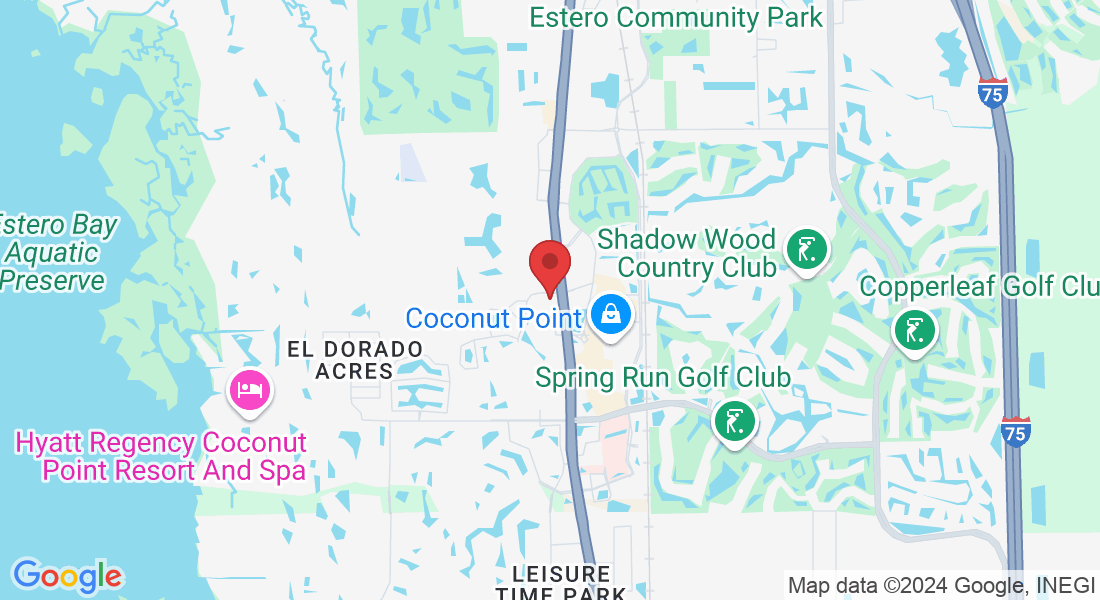

Gulf Coast Memory Care
(239) 427-1455
22900 Lyden Dr, Estero, FL 33928
AL# 12921